Somatic Uncoupling: Disentangling Anxiety from Physical Symptoms
When your daily life involves monitoring physical metrics or managing an unpredictable body, internal sensations rarely feel neutral.
A sudden drop in energy, a flutter in your chest, or a sudden wave of heat can instantly trigger alarm. Within seconds, your mind is racing to answer a urgent question: Is this a medical event, or is it anxiety?
When physical symptoms and stress responses share identical biological pathways, your nervous system learns to fuse them together. The physical sensation triggers fear, and that fear accelerates the physical sensation.
Breaking this automatic loop requires a process known as somatic uncoupling: learning to separate the physical event in your body from the emotional alarm in your brain.
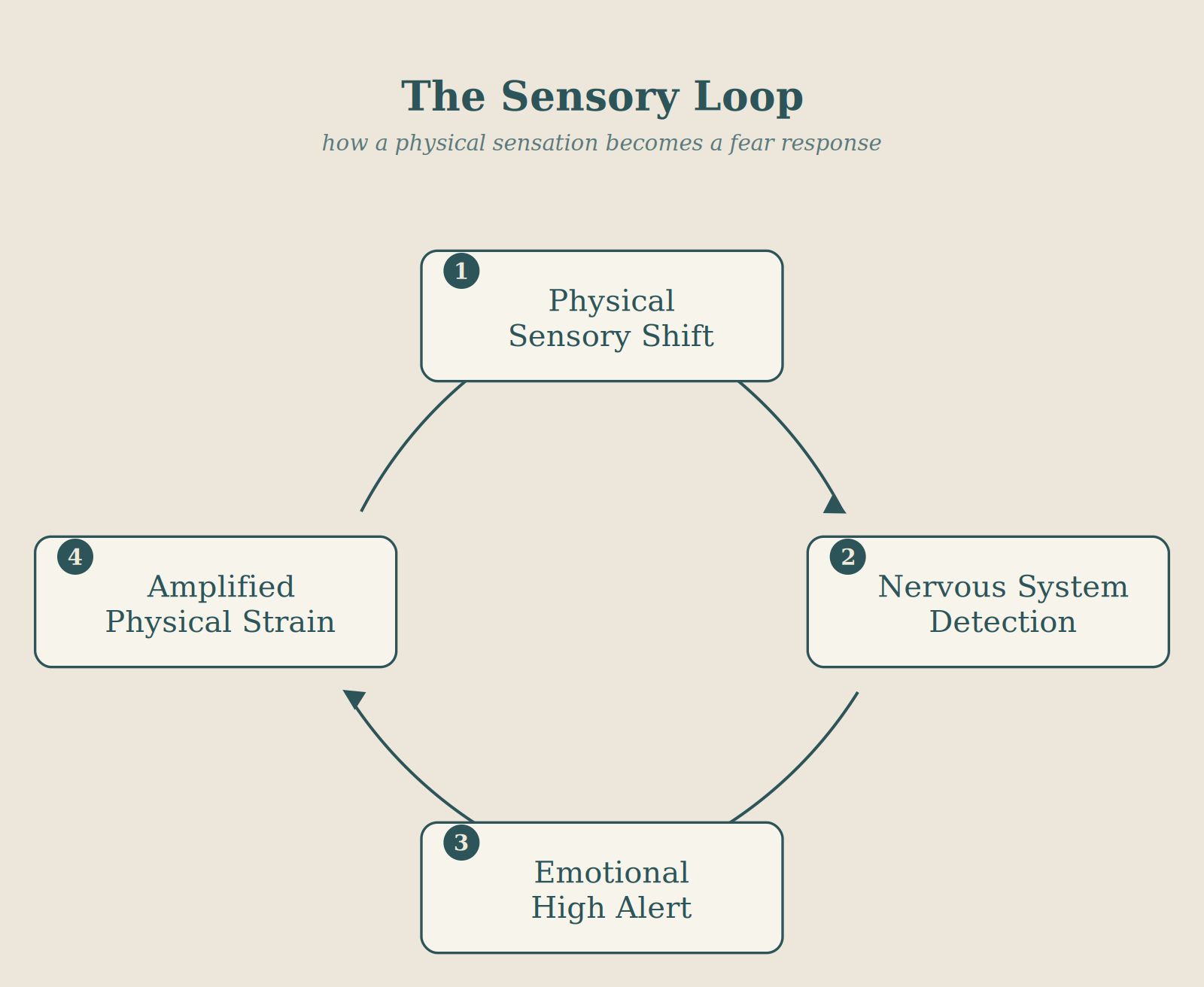
The Anatomy of the Sensory Loop
Physical Sensory Shift: Your body experiences a genuine physiological shift: a wave of shakiness, a dip in energy, a racing heart, or muscle tightness.
Nervous System Detection: Because your system is wired for protection, it flags the physical sensation as a sign of immediate danger, releasing cortisol and adrenaline.
Emotional High Alert: That danger signal registers as fear. Your mind snaps into vigilance, scanning for what's wrong and how serious it is.
Amplified Physical Strain: Adrenaline creates its own physical symptoms (shaky hands, rapid breathing, sweating), which mirror or amplify the original sensation, feeding it back into the nervous system as further evidence that something is deeply wrong.
Re-establishing Sensory Clarity in Practice
Uncoupling physical cues from panic means lowering the emotional charge so you can respond to physical data with accuracy rather than terror.
Neutral Physical Naming: Labeling a sensation strictly by its physical properties (e.g., "my chest feels tight" or "my hands are cold") without adding an emotional story about what that sensation means.
Pacing the Response: Pausing for thirty seconds between noticing a sensation and acting on it, allowing your nervous system time to differentiate between an immediate medical emergency and a heightened stress response.
Creating Somatic Safety Anchors: Utilizing targeted physical touch, temperature shifts, or grounding contact points to signal safety to your brain while your body processes the physical event.
Clinical therapy provides a structured environment to track these internal feedback loops, untangle anxiety from physiological symptoms, and build steady self-trust in your body's signals.
Working Together
I provide somatic and trauma-informed telehealth therapy for adults navigating chronic illness, diabetes distress, anxiety, and identity. Virtual appointments are available for clients in Colorado and Florida, with expanded telehealth services for Virginia coming soon.
