The Invisible Cost of Masking: High-Functioning Burnout in Health and Identity
To everyone else in the room, Alex has it completely together.
Alex leads client meetings, hits project deadlines, and maintains a calm, articulate presence. What colleagues and friends don’t see is the continuous, invisible mental commentary running in the background every hour of the day.
During a typical Tuesday morning, Alex is simultaneously tracking a falling continuous glucose monitor trend line, deciding whether to address a colleague’s incorrect assumptions, making sure a sensor attached to their arm stays hidden beneath a sleeve, and calculating carb ratios for lunch.
When a supervisor praises Alex for being "so organized and resilient," Alex simply smiles and says thank you.
This is the reality of the deliberate, often automatic effort to hide physical discomfort, neurodivergent sensory overload, medical logistics, or identity stress in order to meet social expectations and maintain professional success.
The Struggle of Daily Masking
Masking often develops as a protective strategy to navigate environments that feel invalidating, unpredictable, or rigid. When you live with a chronic condition, navigate neurodivergence, or belong to an underrepresented community, masking starts as a survival mechanism. It keeps you safe in rigid environments and protects you from unwanted advice, invalidation, or invasive questions. Over time, however, the habit of making your complexity invisible to keep others comfortable creates a distinct form of internal exhaustion:
Continuous Translation: Adjusting your speech, body language, or boundaries to keep those around you comfortable with your health needs or identity.
Micro-Calculations: Spending constant cognitive bandwidth deciding when to speak up, when to stay silent, and how to frame basic accommodation requests so you aren't labeled "difficult."
Somatic Suppression: Training your body to swallow physical signals—ignoring fatigue, pain, or sensory overload until your work obligations are finished.
Delayed Nervous System Collapses: Feeling fully capable during the workday, only to experience complete physical and emotional depletion the moment you step through your front door at night.
Because high-functioning masking looks like success from the outside, the internal toll is frequently overlooked by healthcare providers, employers, and even loved ones.
Shifting from Performance to Preservation
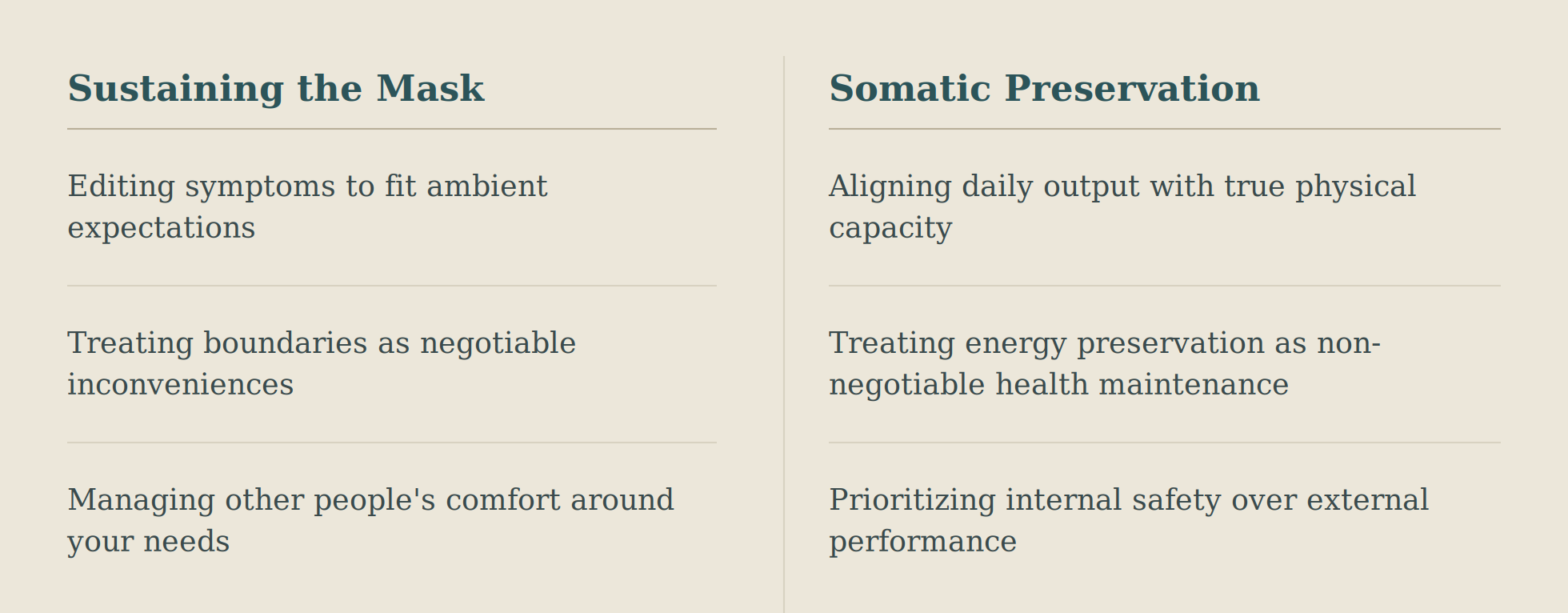
Therapy provides the structured room to execute this shift. In session, we identify where your daily energy leaks occur, explore the protective roots of your masking habits, and build practical strategies to preserve your stamina so you can live comfortably in your own skin.
Working Together
I provide trauma-informed, affirming, and chronic illness-specialized telehealth therapy for adults. Virtual appointments are available for residents across Colorado and Florida, with expanded telehealth services for Virginia coming soon.
